

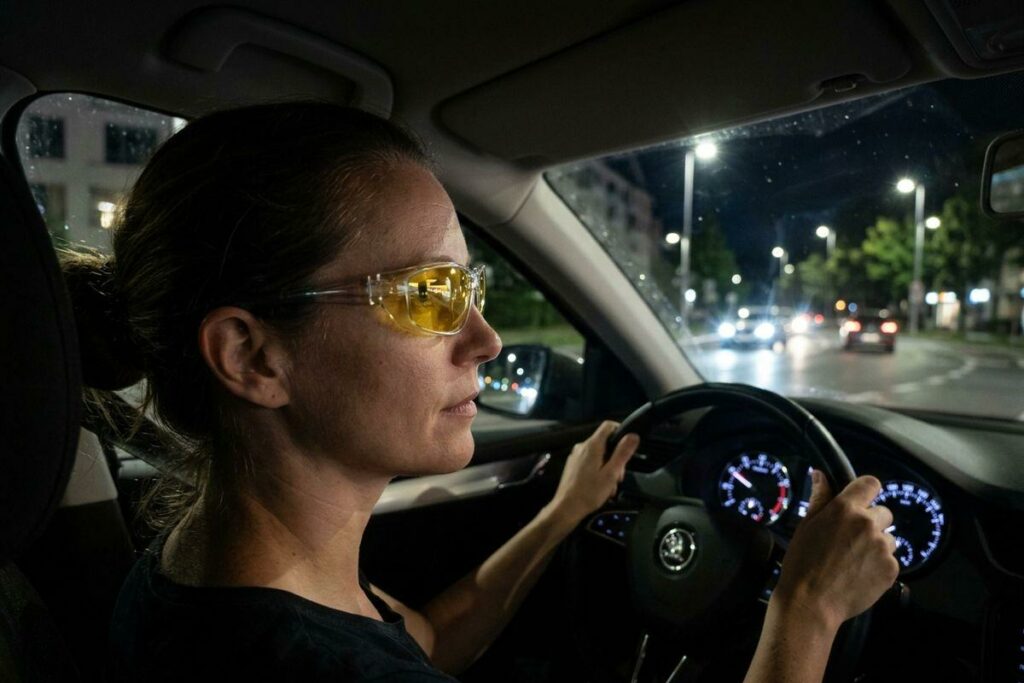
Driving after dark is harder on your eyes than driving in daylight. Oncoming headlights and wet pavement can send glare straight at you, and that can make the trip home feel tense.
So it’s easy to see why yellow night driving glasses look tempting. They may cut a small amount of glare, but research shows they don’t help you spot people on the road any faster, and the tint lets less light reach your eyes.
Book a comprehensive eye exam to find out what’s behind your trouble seeing at night.
What Are Night Driving Glasses?
You’ve probably seen them on a rack near the register or in an ad on your phone. Most night driving glasses have yellow lenses with no prescription, and they’re priced low enough to grab without much thought.
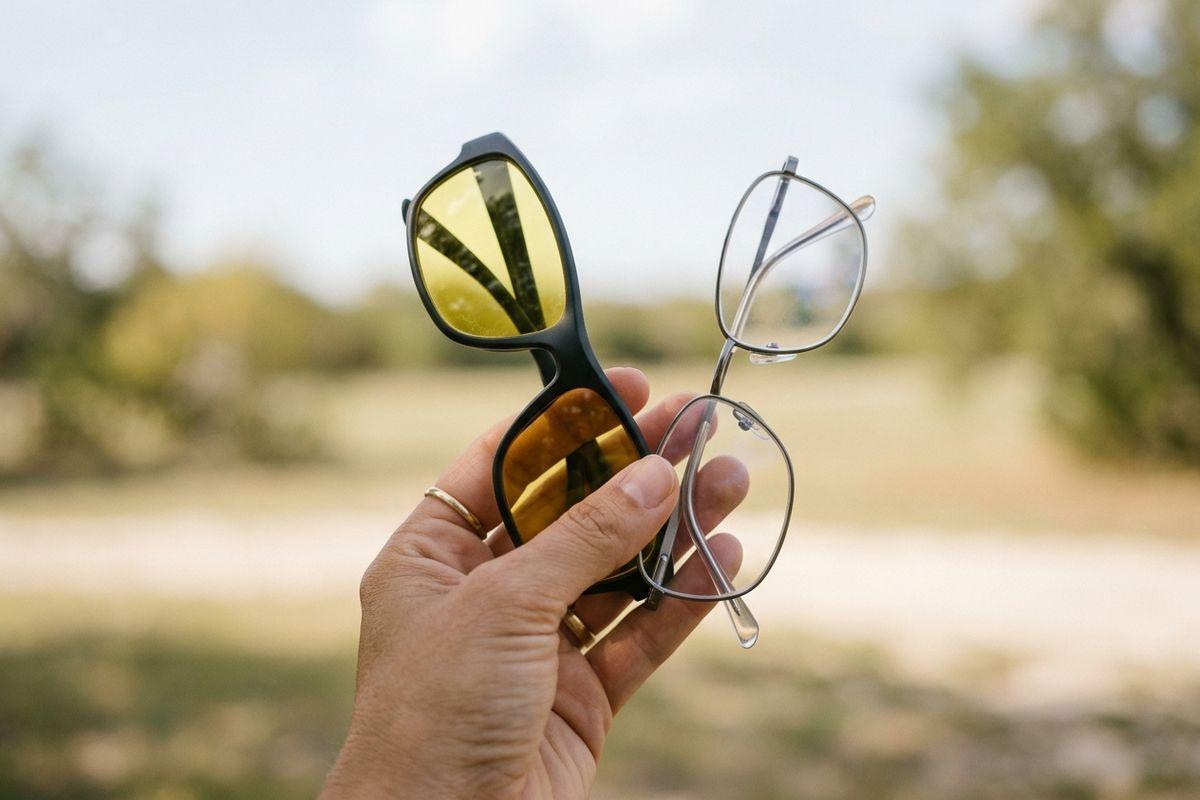
Some pairs add an anti-reflective coating or polarized lenses. The yellow tint has been around for a long time in shooting glasses, where it helps hunters see more contrast in daylight.
What Research Says About Yellow Night Glasses
A tint made for sunny fields doesn’t always carry over to a dark highway. Here’s how yellow lenses hold up once the sun goes down.
What Research Says About Night Driving Glasses
Yellow lenses filter out some blue light, which can reduce glare. Any tint also lowers the amount of light that reaches your eyes. After dark, you need all of it to notice a cyclist near the curb or a pothole up ahead.
Researchers put this to the test in a driving simulator study with both younger and older drivers. People wearing 3 different store-bought pairs didn’t spot pedestrians any faster than they did in clear lenses. The yellow lenses also didn’t lessen the effect of glare from oncoming headlights.
Here’s the tricky part. A yellow tint can make the road look brighter, so you might feel like you’re seeing better when your vision hasn’t improved. That extra confidence could lead you to drive faster than your eyes can handle.
When a Yellow Tint May Help
Daylight is a different story. A yellow tint can sharpen contrast during the day. It can also make the world feel brighter on cloudy or hazy afternoons.
Common Causes of Night Vision Problems
Trouble seeing at night often has a reason behind it, and your eyes tend to drop a few hints first. Watch for a few of these changes:
- Oncoming headlights feel harsh and hard to look past.
- Halos appear around streetlights and headlights.
- Starbursts or streaks spread out from bright lights.
- Lane lines are harder to follow after dark.
- Your eyes take longer to adjust after you pass a brightly lit gas station.
Age plays a big part. As we get older, our pupils get smaller and let in less light, so by our 60s, the back of the eye gets about 1/3 of the light it did at 20.
Eye conditions can make it worse. Cataracts cloud the eye’s natural lens, which scatters light and can turn headlights into a bright smear. Some glaucoma medications shrink the pupil, which also limits how much light gets in.
Even mild nearsightedness can make signs look blurry behind the wheel. Low vitamin A levels may also affect how well you see in dim light.
How to Reduce Glare When Driving at Night
You don’t need a new gadget to make evening drives more comfortable. Start with your glasses if you wear them.
An updated prescription can help road signs and lane lines look sharper. Ask about an anti-reflective coating too. It reduces reflections on the front and back of your lenses, so more light passes through to your eyes and less of it bounces around as glare.
Your car can make a difference as well. Try a few quick fixes before you pull out of the driveway:
- Clean the inside and outside of your windshield.
- Restore or replace cloudy headlight covers.
- Swap out worn wipers that leave streaks.
- Flip your rearview mirror to its night setting so cars behind you don’t light up your view.
When Headlights Feel Too Bright
Once you’re on the road, try these habits when an oncoming car’s headlights feel like a spotlight:
- Look toward the right edge of your lane until the car passes.
- Slow down so your speed matches what you can see.
- Lower your sun visor to block glare from tall streetlights.
Skip the Checkout Rack and See Your Optometrist
Before you buy a pair of tinted glasses, book an eye exam. We can check for cataracts and other changes that affect how you see after dark. From there, we’ll walk you through lens and coating options that fit your eyes and your daily drive. You can leave knowing what’s affecting your night vision and which next steps make sense for you.
If headlights have started to bother you or you’ve noticed new symptoms, reach out to The Vision Place and schedule a visit. We’re happy to help you figure out what your eyes need for the drive home.