

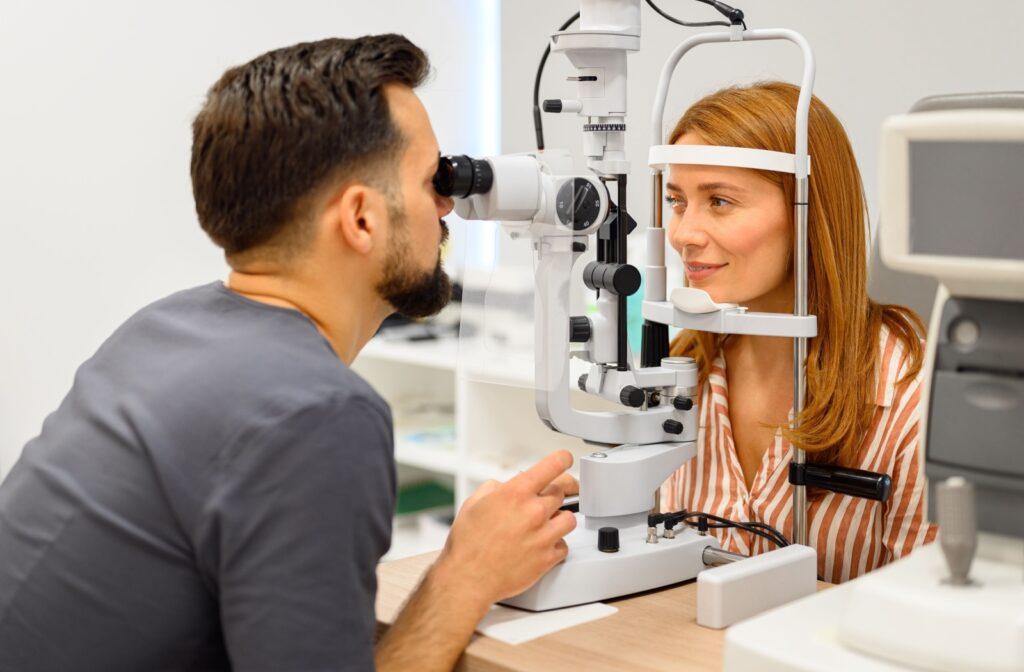
You’ve likely read the letters off a brightly lit chart before, maybe at school or when you renewed your driver’s license. That quick check is a vision screening, and at The Vision Place, our team of eye care professionals knows it only tells part of your story. Your eyes are complex, and a simple pass-fail test doesn’t give you a full picture of their health.
A comprehensive eye exam is a thorough evaluation of your vision and eye health, going far beyond a basic sight test. It’s a dedicated appointment with our team to check not just how clearly you see, but also the physical condition of your eyes and how they work together.
More Than a Simple Vision Check
Routine vs. Comprehensive Exams
A vision screening just measures your ability to see from a distance. Think of it as a single snapshot in a giant photo album full of pictures: It’s useful, but it doesn’t tell you the full story.
A comprehensive exam, on the other hand, looks at your overall eye health. The eye doctor checks everything from your peripheral (side) vision and eye muscle movements to the delicate structures inside your eye. They’ll also ask thoughtful questions that can reveal problems you may not have noticed, or symptoms you didn’t realize were connected to your vision. All of this works together to give you a complete picture of your eye health.
Why It Matters for Your Health
Many common eye conditions, like glaucoma and cataracts, often have no noticeable symptoms in their early stages. A detailed eye exam can help spot these issues before they affect your sight. An eye exam can also sometimes reveal signs of other health conditions, giving you important information about your overall wellness.
What to Expect During Your Exam
Talk About Your Health and History
Your visit starts with a conversation. You can share any concerns you have, like blurry vision or tired eyes. The eye doctor may also ask about your general health, any medications you take, your family’s medical history, and your specific visual needs for work, including how you use your eyes throughout your workday, to better understand your unique needs.
Test Your Vision Acuity
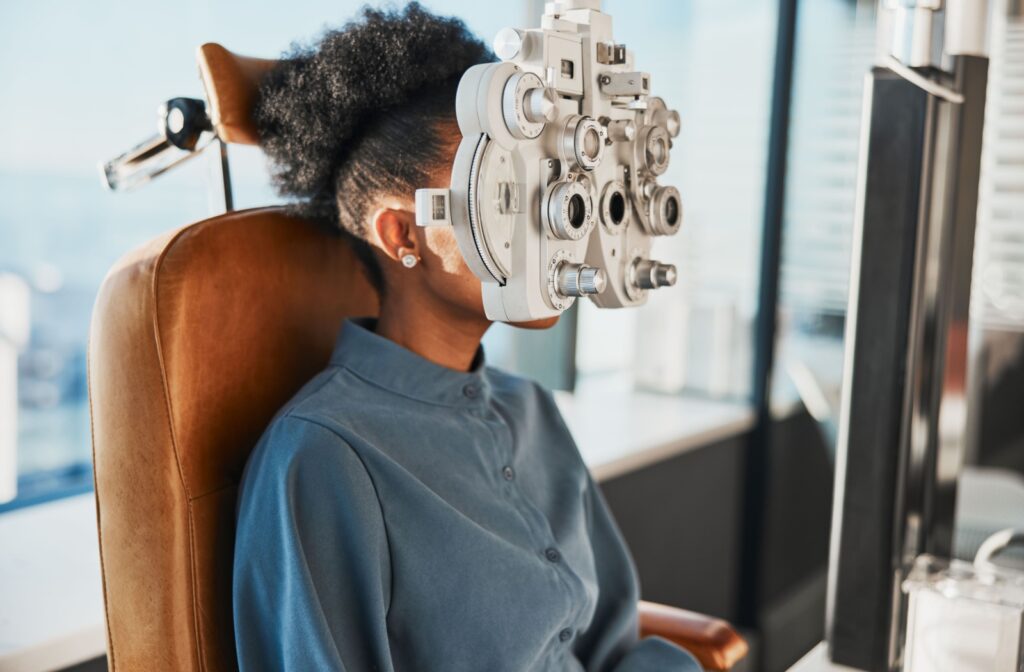
This is the part you probably remember: Reading letters from a chart. This test helps determine how sharp your vision is at different distances. The eye doctor can also perform tests to see how well your eyes focus, move, and work in sync to give you a prescription that feels comfortable and clear.
The Scoop on Eye Dilation
Eye dilation helps give the eye doctor a clear view of the back of your eye. It isn’t always necessary; at The Vision Place, we also offer advanced retinal imaging technology that can check most structures inside your eye without dilation. If the imaging shows anything that needs a closer look, your doctor may then recommend dilation. Our team will always explain what to expect before using any drops.
Why the Eye Doctor Uses Drops
When dilation is needed, the eye doctor uses special eye drops to temporarily widen your pupil (the black circle in the center of your iris). This allows for a detailed view of the back of your eye to check for signs of disease.
What Happens After Dilation
After the drops take effect, you may notice a couple of temporary changes. Your eyes will be more sensitive to light, and your up-close vision might be blurry for a few hours. Because of this, it’s a good idea to bring sunglasses and arrange for someone to drive you home from your appointment.
A Deeper Look at Eye Health and Wellness
What the Eye Doctor Looks For
The process of diagnosing and managing eye diseases might be a key component of your visit. Our eye care team may use imaging like optical coherence tomography (OCT) to look for indicators of glaucoma, age-related macular degeneration (AMD), and other conditions.
Your Personalized Results
Once the exam is complete, the eye doctor can sit down with you to explain all the findings in a clear way. If you need vision correction, you’ll receive a precise prescription for glasses or contact lenses. Our aim is for you to leave our office with a clear understanding of your eye health and any next steps for your care.
Schedule Your Visit with an Eye Doctor
How Often You Need an Exam
How often you should have a comprehensive eye exam depends on your age, your health, your risk factors for developing eye problems, and whether you wear contact lenses. For many adults, an exam every 1–2 years is typically recommended, but a member of our eye care team can suggest a schedule that is right for you.
Stay on Top of Your Eye Care
Regular exams should be an important part of your health routine. When you see an eye doctor in San Antonio for regular exams, you are taking a proactive step toward protecting your vision for years to come. Comprehensive eye exams can catch early signs of eye conditions as well as systemic health issues like diabetes and high blood pressure, and early detection often leads to better outcomes.
Book Your Next Appointment with Us
The compassionate staff at The Vision Place is available to help you on your eye care journey. Schedule your comprehensive eye exam today so we can help you get a complete picture of your vision health.