

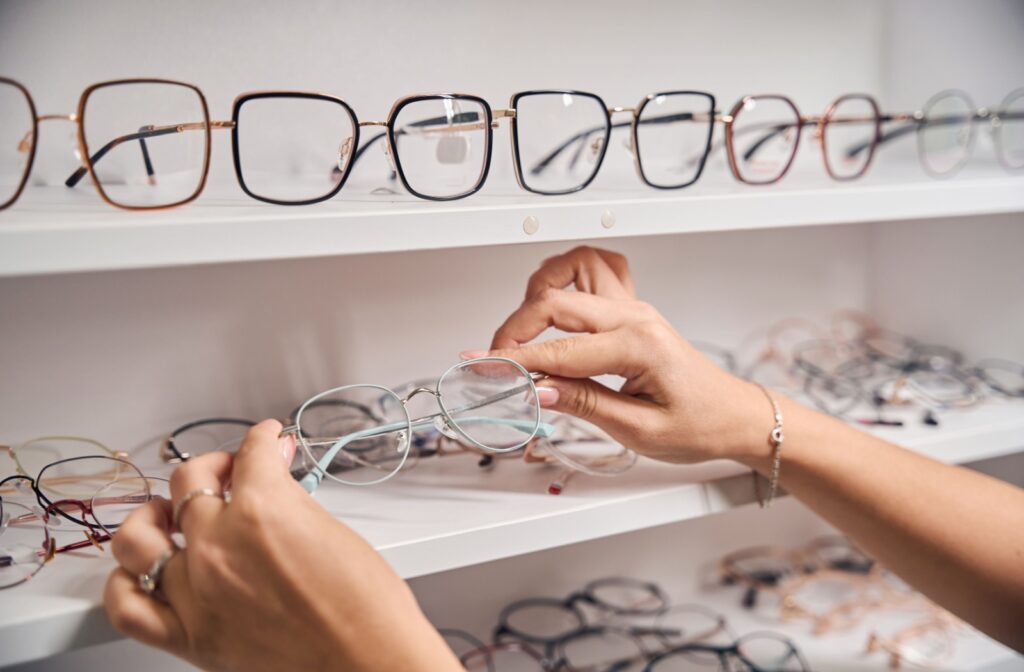
You might find yourself squinting to read a street sign or holding a menu at arm’s length just to make out the words. These moments of blurry vision can be frustrating, but they are common. It often means your eyes just need a little extra help to focus on the world around you, and our team at The Vision Place can help.
Glasses work by bending light before it enters your eye, helping the light focus directly on the right spot to give you clear, sharp vision. Knowing if you need glasses all starts with a comprehensive eye exam.
A Quick Look at How Your Eyes See
How Light Becomes Sight
Seeing feels instant, but it’s actually a team effort between your eyes and your brain. It all starts with light reflecting off objects and traveling toward you. Here’s a quick overview of the trip that light takes to become a picture in your mind:
- Light first enters your eye through tears and the cornea, the clear outer layer.
- The lens, located behind your pupil, then focuses that light.
- This focused light lands on the retina (the back of your eye), which turns it into signals for your brain to interpret.
What Is Clear Vision?
When everything works just right, the lens of your eye focuses light perfectly onto the retina. Think of it like a movie projector focusing a film onto a screen: When the focus is right, objects both near and far appear crisp and well-defined, giving you what we call clear vision.
Common Reasons You Might Need Glasses
Nearsightedness and Farsightedness
Some of the most common reasons for blurry vision are nearsightedness and farsightedness. They are opposites, but both are related to how your eye focuses light.
- Nearsightedness: Objects in the distance look blurry, while things up close are clear.
- Farsightedness: Close-up objects are fuzzy, while distant ones are clearer.
Astigmatism
If your vision feels distorted or blurry at all distances, you might have astigmatism. This happens when the cornea or lens has a slightly irregular shape, causing light to focus unevenly and making things look stretched or out of focus.
Vision Changes with Age
As you get older, it’s common to notice changes in your up-close vision. The lens inside your eye naturally becomes less flexible over time, which can make it more difficult to focus on things like books, phone screens, or activities that require detailed work.
The Simple Science Behind Your Lenses
How Lenses Help You Focus
Eyeglass lenses are a simple and effective tool. They act as a refractor, bending light before it even reaches your eye. This pre-focusing gives your eye’s natural lens a hand, helping the light land exactly where it should on your retina, resulting in a sharp, clear image instead of a blurry one.
Your Prescription Explained
An eye prescription might look like a secret code, but it’s just a set of instructions for crafting your lenses. The numbers indicate the power needed to correct your vision. Because this can change over time, prescriptions should be updated regularly to keep your vision sharp. You will often see a plus (+) or a minus (-) sign, which tells a simple story.
- Plus signs (+) are used for farsightedness to help you see up close.
- Minus signs (-) are used for nearsightedness to help you see far away.
Signs It May Be Time for an Eye Exam
Sometimes the signs that you need glasses are subtle. You might get used to squinting or holding things further without even realizing it. Pay attention to your body, because it can give you clues that it’s time for a check-up. Watch for these common signs:
- Frequent headaches, especially after reading or using a computer.
- You catch yourself squinting to see road signs or the TV.
- Vision that seems blurry or fuzzy, whether close up or far away.
Myths and Facts About Vision Care
Can Eye Exercises Fix Your Vision?
You may have heard that specific eye exercises can correct your vision. While some supervised programs, often called vision therapy, can help with eye strain, they cannot change the physical shape of your eye. Refractive errors like nearsightedness or astigmatism are due to the eye’s anatomy and require corrective lenses to see clearly.
Do Glasses Make Your Eyes Weaker?
This is a popular myth that causes some people to avoid wearing glasses. The truth is that glasses don’t make your eyes weaker: They simply help you see clearly without straining your eye muscles.
Discover Your Prescription
If you are experiencing any changes in your vision, our knowledgeable team at The Vision Place is available to answer your questions. Schedule a visit with an eye doctor to find your prescription and discover your new favorite pair of glasses.