


If you wear both glasses and contacts, you might have noticed that the prescriptions for these are a little bit different. But have you ever wondered why?
Your contact lens prescription is different from your glasses prescription because these two kinds of lenses sit at different distances from your eyes. In order to wear contact lenses, you’ll need a contact lens fitting to measure your eyes and help determine what kind of lenses will give you the sharpest vision. An improper fit or incorrect material can reduce oxygen to the eye, increase dryness, and raise the risk of complications.
Why Your Prescriptions Are Different
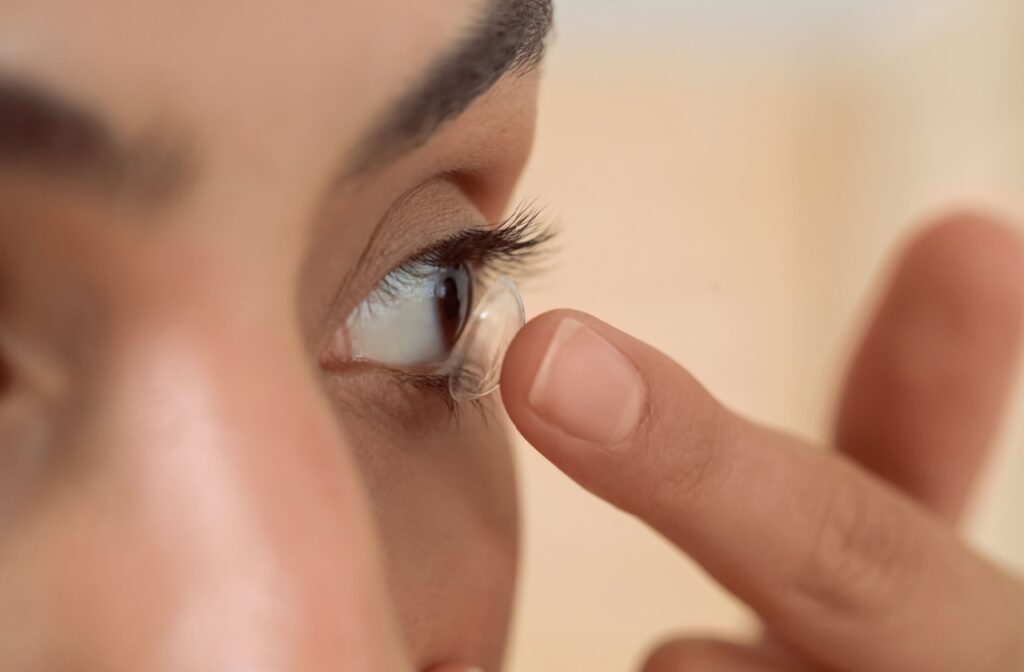
Your glasses sit about 12 millimeters away from your eyes, held in place by your frames. Contact lenses, on the other hand, sit directly on the surface of your cornea. This difference in position affects the shape of the lens that’s needed to focus light correctly onto your eye.
Because contact lenses touch your eye directly, prescriptions for contacts include additional measurements of the size and shape of your eye. This helps ensure a safe, comfortable, and healthy fit.
What a Contact Lens Prescription Includes
When you look at a contact lens prescription, you’ll see measurements and details that aren’t part of a prescription for glasses. These numbers are what help the eye doctor find the right lens for your eye health and lifestyle.
Important values for a contact lens prescription include:
- Power: This is the strength of correction your vision needs, similar to glasses, but adjusted for the different distances.
- Base Curve (BC): This measures the curvature of the contact lens to match the front surface of your eye.
- Diameter (DIA): This is the width of the lens from edge to edge, which helps it stay centered and comfortable.
- Brand & Material: Different materials affect how much oxygen reaches your eye. Your doctor will prescribe a brand that works for your vision needs. Some materials are healthier for certain eyes than others, especially for patients with dry eye, allergies, or longer wear times.
What a Glasses Prescription Includes
Glasses sit on the bridge of your nose, so they correct your vision from a short distance away. This means that a prescription for glasses has its own set of important measurements. These include:
- Power: This number indicates the strength of the lens needed to correct your nearsightedness or farsightedness.
- Cylinder & Axis: If you have astigmatism (an imperfection in your eye’s curve), these numbers describe the extra correction needed.
- Add: This is for bifocal or progressive lenses and provides the added power needed for reading and close-up tasks.
- Pupillary Distance (PD): This is the distance between your pupils, which is used to correctly center the lenses in your eyewear frames.
Can You Convert One Prescription to Another?
You cannot use your glasses prescription to buy contact lenses, or vice versa. The power of each prescription is different, plus contact lenses require details that you don’t need when wearing glasses. Ordering contact lenses without a proper prescription or fitting, especially online, can result in lenses that damage the cornea or compromise eye health. An eye care professional can help you determine the right specifications for both.
Contact Lens Exam & Fitting
To get a contact lens prescription, you’ll need a contact lens exam and fitting. During this appointment, your eye doctor will check your vision and measure the shape of your cornea. They’ll also assess your tear film to help find the right brand of contact lens for your eyes. This process helps prevent complications and ensures your lenses are both safe and comfortable for daily wear.
How Long Does a Contact Prescription Last?
Your eyes can change over time, and your prescription may need updates to keep your vision crisp. Because of this, contact lens and glasses prescriptions are typically valid for up to 1 year. An annual eye exam is an important step to check on your eye health.
This yearly visit helps confirm that your prescription is still right for you and that your contacts are fitting properly. Regular check-ups with your eye doctor can help keep your eyes feeling good and seeing well. It’s a simple way to care for your vision for years to come.
Schedule Your Exam For Glasses & Contacts
Whether you love the freedom of contacts, the style of glasses, or switching between both, you need a separate, up-to-date prescription for each one. The only way to get these is through a comprehensive eye exam and a dedicated contact lens fitting. As your eye doctor in San Antonio, our team at The Vision Place is here to help you see clearly, no matter which option you choose. Ready to get the right prescription for your needs? Schedule your exam with us today.