

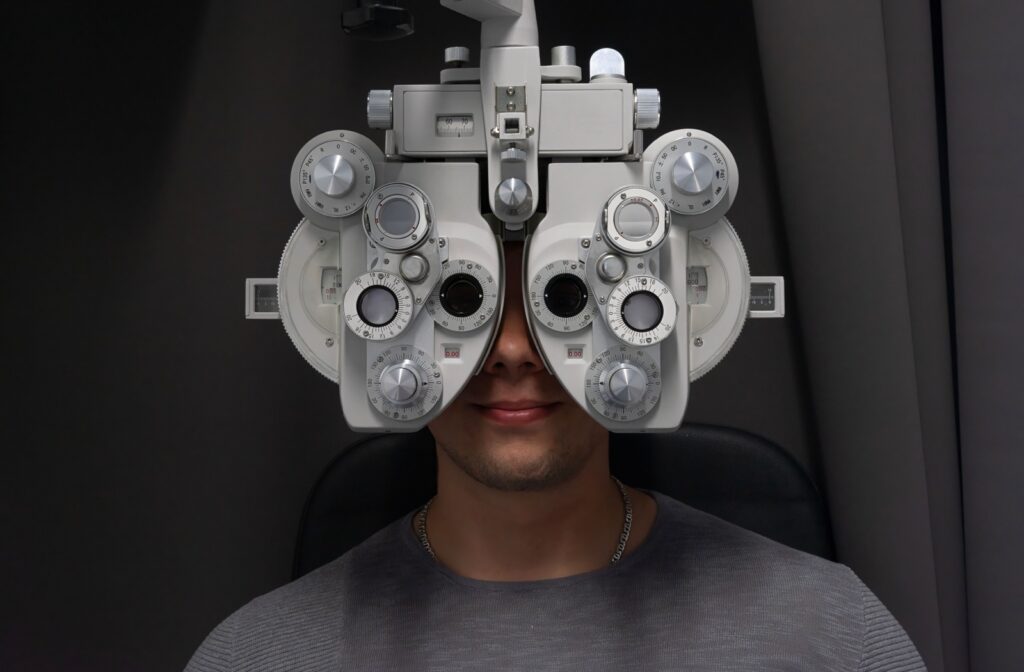
You may find yourself squinting at a distant sign, trying to make out the words. Or maybe you’ve noticed your eyes feel tired and achy after a day of working on the computer. These small moments are easy to dismiss, but they can be your eyes’ way of telling you something has changed.
Your vision is a dynamic part of your health, and the team at The Vision Place understands that it changes over time. The key is to listen to your body—subtle shifts in your vision, new discomfort, or even your general health history can all signal it’s time for an adult or senior eye exam.
Changes in Your Everyday Vision
1. Blurry or Hazy Sight
One of the most common signs that you may need an updated prescription is a change in clarity. Things that used to be sharp might now seem a bit fuzzy, like you’re looking through a lightly fogged window. This can be caused by common refractive errors like myopia or hyperopia. You may notice this in specific situations:
- Trouble reading street signs
- Difficulty seeing faces clearly
- Objects look cloudy or fuzzy
2. Frequent Squint & Trouble at Night
Squinting is a natural way to try to bring an object into focus. If you find yourself doing it often without thinking, your eyes are working harder than they should. This can be especially noticeable when driving after dark, as your eyes struggle to adapt to low light and oncoming headlights, which can sometimes be a sign of astigmatism.
Physical Discomfort & Eye Strain
3. Frequent Headaches & Pressure
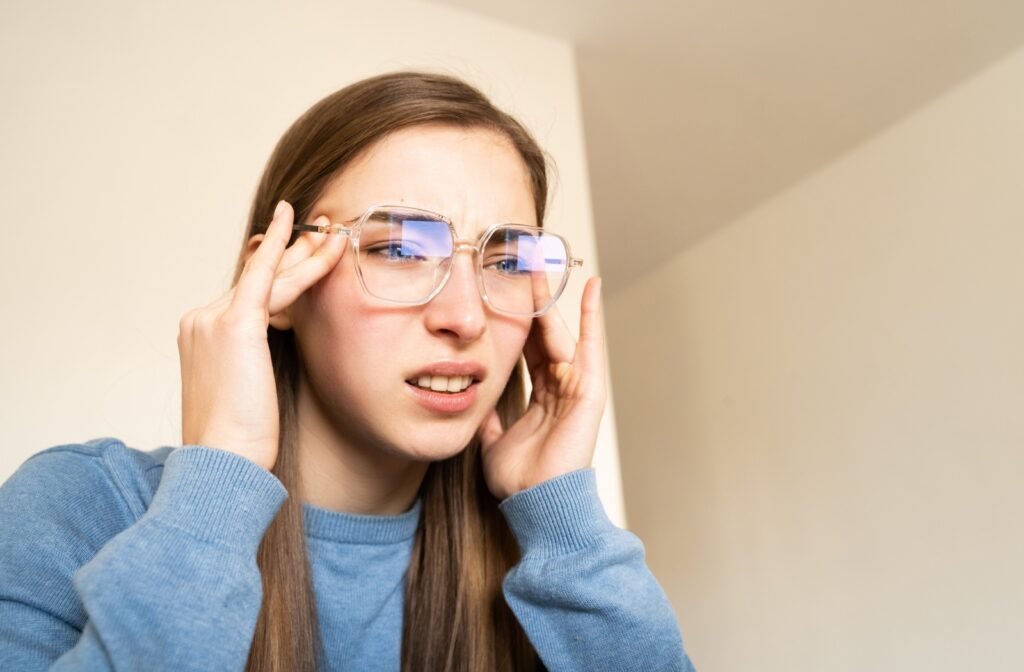
Unexplained headaches, especially those that feel like a dull ache behind your eyes, can be connected to your vision. When your eyes strain to focus, the tiny muscles around them get overworked. This tension can lead to headaches, particularly after long periods of reading or screen time, and may even be associated with dry eye symptoms.
4. Persistent Eye Fatigue
Your eyes can feel tired just like any other part of your body. If they often feel heavy, scratchy, or watery, you could be experiencing eye fatigue, a common symptom of digital eye strain, but it can also point to an uncorrected vision issue.
Sudden & Unusual Visual Events
5. New Floaters & Flashes of Light
Seeing an occasional “floater”—those tiny specks or squiggly lines that drift across your vision—is usually normal. However, a sudden increase in floaters or seeing flashes of light can be a sign of changes in the back of your eye that are worth checking out.
6. Increased Sensitivity to Light
Do you find yourself reaching for sunglasses more often, even on overcast days? Increased light sensitivity, or photophobia, can make bright indoor lights and sunshine feel uncomfortable or even painful. It can be a symptom of an underlying eye condition, which is why it is important to understand what diseases can be detected during an exam.
Your Overall Health & Risk Factors
7. Chronic Health Conditions
Your eyes are windows to your overall health. Conditions like diabetes and high blood pressure can affect the blood vessels in your eyes, which is why an eye exam can sometimes detect diabetes. It is also a good idea to schedule an exam if you have a family history of eye conditions like glaucoma or macular degeneration.
8. It Has Been Too Long
Even if you have no noticeable symptoms, regular eye exams are an important part of your health routine. Vision can change so gradually that you may not notice it day to day. A comprehensive exam provides a clear picture of your current eye health, and you might be surprised to learn how long an eye exam takes—it is an efficient way to check in on your vision.
When It Is Time to Act
9. A Stubborn Eye Infection
An eye infection can cause a range of uncomfortable symptoms. While some minor irritations clear up on their own, a persistent issue requires professional attention and may require emergency eye care. Look out for these signs.
- Redness, swelling, or discharge
- Itching or gritty feeling
- Does not resolve on its own
10. You Just Need a Check-Up
Sometimes, the best reason to see an eye doctor is for proactive care. An exam establishes a baseline for your vision and eye health, making it easier to track future changes. If you have any concerns, it helps to talk to your eye doctor in San Antonio. Your eyes do a lot for you every single day. Paying attention to these signs can help you care for them in return. The team at The Vision Place is ready to answer your questions and help you feel informed about your eye health. Schedule your visit today to get a clear picture of your vision.